.svg)
.svg)
The gas utility industry has reached a definitive tipping point. For decades, damage prevention was managed as a high-volume administrative task: the goal was to process as many 811 tickets as possible, dispatch locators, and hope the markings hold. But in an era defined by aging infrastructure, intensifying urban density, and rigorous safety mandates, "hoping for the best" has become a liability that utilities can no longer afford.
To protect critical assets and the people they serve, the industry is undergoing a strategic pivot from reactive ticket processing to Predictive Prevention.
Too Much Data, Not Enough Insight
Traditional damage prevention programs are currently drowning in a "needle in a haystack" problem. When thousands of One Call tickets flood the system daily, the sheer volume creates a dangerous signal-to-noise ratio where every ticket appears equally urgent on paper.
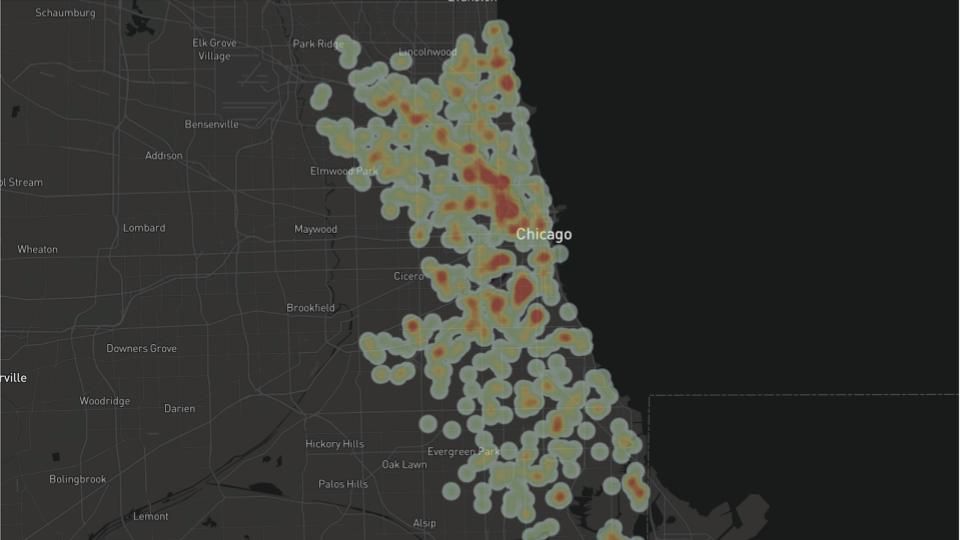
- The Reality of Risk: The industry recognizes that not all tickets carry the same weight; the true threat to system integrity is concentrated in a small percentage of high-risk digs.
- Technology underutilization (or misuse): While advanced technologies like GIS, GPR, and ticket management systems are available, their adoption remains inconsistent. Currently, these tools operate in silos without cross-platform integration. Furthermore, the deployment of new systems without comprehensive training has resulted in poor data integrity, preventing the organization from fully leveraging its tech stack.
- The Cost of the Status Quo: Beyond the immediate repair costs, asset damages threaten system reliability and, more importantly, endanger the safety of the community.

AI-Powered Underground Asset Protection
This mandatory shift requires moving beyond manual ticket screening and toward a framework of Predictive Intelligence. Urbint Damage Prevention facilitates this by integrating with existing systems to provide a clear, real-time picture of risk.
By combining AI with a proprietary Model of the World, utilities can transform raw data into a proactive defense strategy.
-
Strategic Risk Prioritization: Rather than a "first-in, first-out" approach, the predictive model analyzes every 811 ticket to assign a specific risk score. This signals exactly which underground assets are most vulnerable, allowing locators to ensure critical lines are marked with surgical accuracy before a shovel ever touches the dirt.
-
Protecting High-Consequence Areas: Predictive prevention allows utility leaders to move from general oversight to targeted intervention. By identifying high-consequence risks, teams can prioritize preventative actions in sensitive zones, like schools, hospitals, and densely populated urban areas.
-
Maximizing Resource Impact: In an environment of lean teams and tight budgets, predictive analytics act as a force multiplier. By focusing on the "vital few" high-risk tickets and automating outreach to vulnerable excavation sites, utilities can achieve outsized safety results without a proportional increase in headcount.
The Data of Success
The shift to predictive prevention is not a theoretical exercise; it is a field-proven strategy adopted by some of the largest utilities in North America. These organizations have successfully transformed their maintenance departments from reactive cost centers into data-driven safety leaders:
|
Utility Partner |
Impact Metric |
Achievement Highlights |
|
National Grid |
37% Reduction |
Achieved a 37% decrease in total damages between 2019 and 2025. |
|
Southern Company Gas |
30% Reduction |
Identified 50% of damages within just 5% of tickets, driving down third-party damage rates by 30%. |
|
Enbridge Gas |
23% Reduction |
Leveraged AI threat modeling to significantly reduce damage incidents over a two-year period. |
Charting the Future at CGA 2026
As the industry gathers for the 2026 CGA Conference & Expo, the central conversation has moved beyond basic utility locating to "Charting the Course" for true damage prevention. The themes of this year’s conference; AI integration, stakeholder collaboration, and smart infrastructure, mirror the shift we are seeing across the industry.
Utilities like National Grid and Southern Company Gas are already proving that when we use AI to see around corners, we do more than protect pipes; we secure the trust of the communities that rely on them.
The Bottom Line: Defining the Future of Safety
The mandate is clear: we cannot solve the challenges of modern infrastructure with the reactive tools of the past. Predictive prevention is about more than just reducing O&M costs - it is about a cultural commitment to proactive resilience.
By leveraging AI to see around corners and predict the unpredictable, utilities are doing more than protecting pipes; they are securing the trust of the communities that rely on them. The question is no longer whether to adopt predictive intelligence, but how quickly it can be integrated into the front lines.
Interested in learning more about Urbint Damage Prevention? Click here for more information